



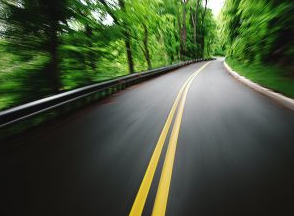
 When learning to drive you are taught to grip the steering wheel at ten and two, unless you’re thinking of a digital clock; then it gets confusing. If you weren’t taught by an Alexander Technique teacher, you likely weren’t taught how to grip the steering wheel, how little muscular effort is needed, or how to stop gripping in other parts of your body while driving. The Alexander Technique helps us become aware, notice, observe. I observed that for highway driving I could get away with keeping my hands comfortably lower; perhaps around four and seven, give or take a few minutes. I noticed excess tension in my hands. Once I released that extra effort I was able to notice tension elsewhere, including my jaw and my neck, and release that unneeded muscular effort also.
Moving up and away from my hands, I checked to see if I was unnecessarily lifting my shoulders. We don’t want to press them down to counteract any lifting; instead, we want them to gently rest on our ribcage. Alexander Technique suggests not lifting your shoulders up, not pressing them down, not thrusting them forward, and not pulling them back. Basically you want to leave your shoulders alone. You could think the left one widening out to the left, and the right one widening out to the right. Then, if your torso is not collapsing down in front, your shoulders will probably be fine where they are, for now.
If you are collapsing down in front, you could try these Alexander Technique ideas: Allow your neck muscles to be free (let go of excess tension) Your head will rotate forward while the crown of your head will move up leading the spine into length. This will help your entire torso expand into length and width. Your shoulders will narrow less and they’ll likely move back, without you actively moving them back. Notice any excess stress, and see if your hands are unnecessarily gripping the steering wheel again. Observe your breathing and let it be full from top to bottom, side to side and all the way around. We want three hundred and sixty degrees of expansion and contraction. If you think of these principles as you drive, you may have to start the trip by readjusting your rear view mirror. Upwards.
Join the conversation!
Have you noticed extra tension when you drive?
Are you aware of excess gripping of the wheel?
Mark Josefsberg-Alexander Technique NYC
(917) 709-4648





Thanks for the tips. I am currently taking an Alexander Technique methods course at college and I have practiced some of these techniques. They really help relive some tension on my long commute to school.
Thanks for writing, Kari. Yes the Alexander Technique will help on your long commute to school, and it can help once you get there. The Alexander Technique is an extremely useful tool.